Stuck in car in snow: stay put, clear the tailpipe, ration the engine
A car stuck in a snowstorm is cold, but it is shelter. The danger is leaving it, or running the engine with a tailpipe packed with snow.
In this article
If you are stuck in car in snow, the National Weather Service's first rule is to stay with the vehicle. Call 911 if you can. Before you run the engine for heat, clear snow from the exhaust pipe, then run it about 10 minutes each hour with a window open a little. Make the car easy for rescuers to spot.
The Off-Grid Handbook gives the same procedure in step 4 of Project 69, the Vehicle Kit, and calls the blocked-exhaust check the life-safety line of winter stranding.
Stuck in car in snow: stay with the vehicle
It is tempting to walk for help, especially if a house or a gas station seems close. The National Weather Service explains why not: if you leave your vehicle, you will become disoriented quickly in wind-driven snow and cold. Distances that look short in clear weather can't be judged in a whiteout.
The car is a windbreak, a roof and a big, visible object. A person walking in a snowstorm is none of those. Ready.gov's winter guidance says the same: if trapped in your car, stay inside.
Call for help and make the car easy to find
If you have a signal, call 911 and give your road, direction of travel, the last exit or mile marker you remember, and how many people are in the car. Then save the phone battery: turn the brightness down and close apps. A charged power bank in the trunk kit, as the Handbook packs, buys a lot of time. If a call won't connect, try a text: texts can get through when phone lines are busy.
It also helps if someone already knows where you are. Before any winter drive, tell a family member your route and when you expect to arrive, so a missed arrival time starts a phone call instead of a long silence.
Next, help rescuers see you. The NWS and CDC suggest:
- Tie a brightly colored cloth, preferably red, to the antenna or a door. The Handbook calls this a visible marker on the antenna.
- Turn on the dome light at night while the engine is running.
- Raise the hood once the snow stops falling, to show you need help.
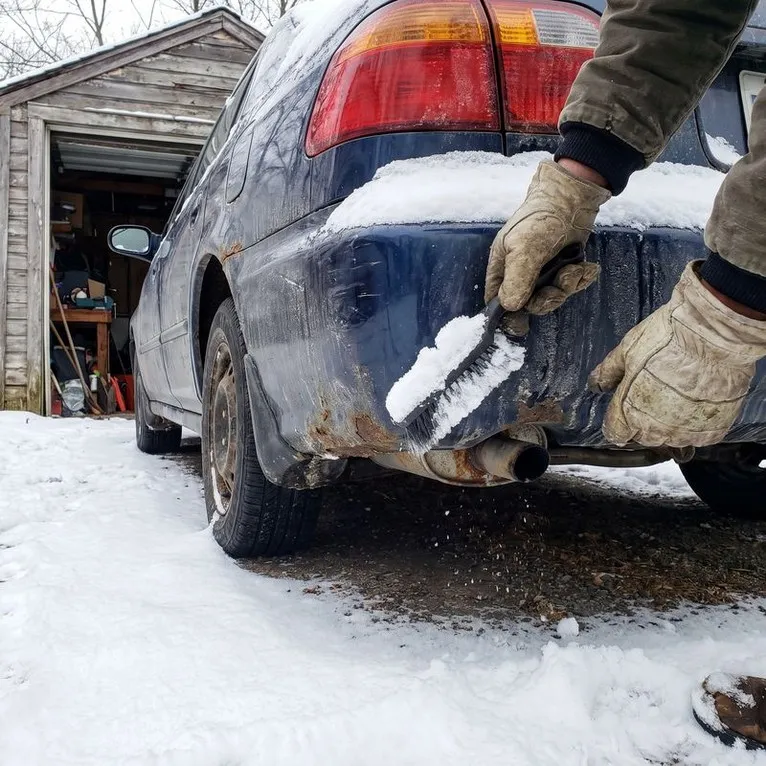
Clear the exhaust pipe before every engine run
This is the step that saves lives. When snow packs the tailpipe, exhaust has nowhere to go and is pushed into the cabin. The Handbook's safety box says to clear it before every engine cycle, every time. The CDC says the same: make sure snow is not blocking the exhaust pipe, to reduce the risk of carbon monoxide poisoning.
If it is safe to step out, brush or dig the snow away from the tailpipe and the area around it, then get back in. If the snow is too deep or the wind too strong to step out safely, don't run the engine.
Carbon monoxide has no smell or color. The CDC lists headache, dizziness, weakness, upset stomach, vomiting, chest pain and confusion as common symptoms. If anyone in the car feels this way while the engine runs, turn the engine off and get fresh air right away, then call 911. More in carbon monoxide poisoning symptoms.
Staying warm in a stranded car in a snowstorm
The NWS and CDC agree on the engine rule: run the motor and heater about 10 minutes each hour, with one window opened slightly for fresh air. That keeps the cabin livable and stretches the fuel. Between engine runs, keep the heat in your body:
- Wrap up completely, head included, in extra clothing, blankets, a sleeping bag or even newspapers, as the CDC suggests.
- Keep moving your arms and legs while you sit, to help circulation.
- Huddle together if there is more than one of you.
- Don't eat snow. The CDC notes it lowers body temperature. Drink from the water in your kit instead.
- Stay awake. The CDC says you will be less vulnerable to cold-related health problems.
Watch each other for the warning signs Ready.gov lists. Hypothermia: shivering, exhaustion, confusion, fumbling hands, memory loss, slurred speech or drowsiness. Frostbite: numbness, white or grayish-yellow skin, firm or waxy skin. If you see them, tell the 911 dispatcher, since they change how urgent your rescue is.
What to do if stranded in car in winter overnight
A long wait is mostly about rhythm. Set a timer on the phone for the engine cycle so nobody loses track in the cold: clear the pipe, crack the window, run 10 minutes, engine off. If there are two adults, take turns staying alert, so someone is always watching the time and the road.
Fuel is what keeps that rhythm going, and this is where the Handbook's habit pays off. Step 2 of Project 69 is the half-tank rule: fuel never below half, standing policy. The CDC also suggests keeping the tank near full in winter to help avoid ice in the tank and fuel lines. A half tank at the start of a storm means hours of engine cycles.
Keep the radio low for weather updates during engine runs. Before running heat off a car in other situations, such as an outage at home, read using your car as a generator: the same carbon monoxide rules apply, and a car must never run in a garage.
The kit and habits that make this easier
Project 69 takes about an hour and roughly $80. Its trunk tub holds rotated water, calorie bars, a blanket or bag, first-aid basics, a flashlight, gloves, a phone power bank, a paper map, a small tool roll, a tow strap and jumper cables or a jump pack. The winter module adds an ice scraper, a traction aid and extra insulation. The tub is strapped down, because loose gear becomes projectiles.
Ready.gov's car kit list overlaps: jumper cables, sand, a flashlight, warm clothes, blankets, bottled water and non-perishable snacks. Our full car emergency kit list covers what goes in and how to rotate it, and a rated bag helps: see sleeping bag temperature ratings.
The best plan is still not to be on the road. Ready.gov's advice is to stay off roads if at all possible during a winter storm. Our winter storm preparedness checklist helps you get everything done at home before the snow starts.
Frequently asked questions
What should you do if you are stuck in your car in a snowstorm?
Stay with the vehicle, call 911 if you can, and tie a bright cloth to the antenna. Clear snow from the tailpipe before running the engine, then run it about 10 minutes each hour with a window opened slightly, as the National Weather Service advises.
How long can you run your car for heat if stuck in snow?
The National Weather Service and CDC say to run the motor and heater about 10 minutes each hour, with one window cracked for fresh air. Clear the exhaust pipe of snow before every engine run to avoid carbon monoxide poisoning.
Why is a blocked tailpipe dangerous?
Snow packed around the tailpipe can push exhaust into the car, and exhaust contains carbon monoxide, which has no smell. If anyone gets a headache, dizziness, nausea or confusion with the engine running, turn it off, get fresh air and call 911.
Should you leave your car to find help in a blizzard?
No. The National Weather Service warns that you will become disoriented quickly in wind-driven snow and cold. The car is shelter and is much easier for rescuers to find than a person on foot.
Sources
- The Off-Grid Handbook, Garrett Dalton, Project 69
- National Weather Service: During a Winter Storm
- CDC: Safety Guidelines During and After a Winter Storm
- Ready.gov: Winter Weather
- Ready.gov: Car Safety
- CDC: Carbon Monoxide Poisoning Basics
- CDC: Winter Weather Safety
Safety guidance changes. Check the agency pages above for the current version, and follow your local code and manufacturer instructions.