How to store firewood outside and keep it dry
A woodpile does two jobs: it finishes drying the wood and it keeps the rain off. A full tarp and a spot against the wall do neither.
In this article
- How to store firewood outside: the basics
- Why firewood goes off the ground
- How to store firewood outside and keep it dry
- How far from the house should firewood be?
- Woodshed, rack or open stack?
- Bringing firewood indoors
- A simple firewood storage checklist
- Why storage matters for your outage plan
- Frequently asked questions
If you are wondering how to store firewood outside, the short answer is: stack it off the ground on a rack, pallets or rails, cover only the top and leave the sides open so air can move through. Keep the pile away from the house, and bring in only a day or two of wood at a time. That is the EPA's guidance in one sentence: outdoors, off the ground, with only the top covered, because covering the sides traps moisture.
The Off-Grid Handbook keeps it short in its Project 55 field note: two cords of seasoned wood, properly stored, is stored heat that needs no electricity. This guide covers what "properly stored" means.
How to store firewood outside: the basics
- Pick a spot with good air movement, away from the house walls, on ground that drains.
- Raise the base. Use a metal rack, pallets or a pair of rails. UNH Extension suggests old pallets as an easy base.
- Stack in rows, pieces parallel and snug, with gaps between rows so air can reach every piece.
- Cover the top only, with a short roof, a sheet of metal or a tarp that stops partway down the sides.
- Keep a small supply near the door, a day or two at most, and the main stack out in the yard.
Why firewood goes off the ground
Wood sitting on soil pulls moisture up from below and rots from the bottom of the stack. University of Maryland Extension says not to stack wood directly on the ground but to use a woodshed or rack with space underneath, so air can reach and dry all parts of the logs.
A raised stack also keeps insects out. Iowa State University Extension notes that stacking off the ground both helps drying and makes it harder for insects to crawl into the woodpile.
How to store firewood outside and keep it dry
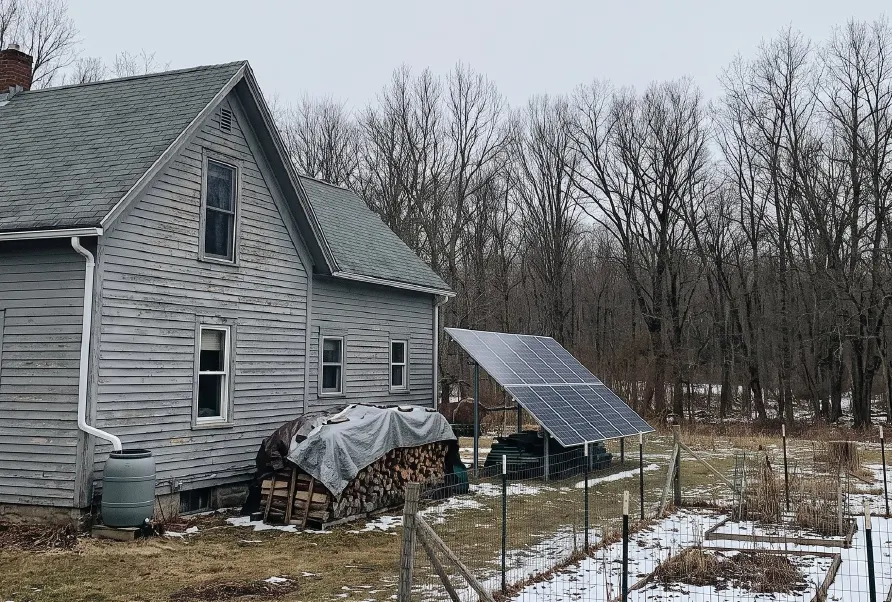
The most common mistake is wrapping the whole pile in a tarp. It feels protective, but it holds in the moisture rising from the wood and the ground, and the stack sweats instead of drying.
- Cover the top, not the sides. The EPA and University of Maryland Extension both say it plainly. UNH Extension gives the reason: only cover the top of the pile, to avoid trapping moisture.
- Let it breathe. Maryland Extension advises stacking to allow air flow through the openings, which aids drying.
- Full covers are for dry wood in bad weather. Maryland Extension notes that some commercial racks come with full covers, meant for extreme weather and only after the wood has cured.
If the wood is still green, the woodpile is also your drying rack. Our guide on how long firewood takes to season covers moisture targets and how to test with a meter.
How far from the house should firewood be?
Not against it. Iowa State University Extension advises stacking firewood off the ground and away from your home, and leaving it outside until a day or two before it will be burned. Insects in a cold outdoor woodpile stay inactive; a stack against a warm wall is a different story.
Fire is the other reason. In wildfire country, Ready.gov advises keeping a zone free of leaves, debris and flammable materials for at least 30 feet from your home, and a woodpile is exactly that kind of fuel. Check with your local fire department or extension office for the rule where you live.
Iowa State also strongly advises against spraying firewood with insecticide: it does little good and the chemicals can vaporize into your home when the wood burns.
Woodshed, rack or open stack?
All three work if they follow the same rules: off the ground, top covered, sides open to the air. University of Maryland Extension names a woodshed or a wood rack as the two simple ways to keep space between the ground and the wood.
- Woodshed: a roof with open or slatted sides. Best for a large supply, and the roof does the covering for you.
- Metal rack: holds a face cord or so off the ground, with a cover that fits the top. Good for small yards.
- Open stack on pallets: the cheapest option. Put a short roof or a top-only tarp on it, weighted so wind cannot strip it.
Some places have rules of their own. University of Maryland Extension notes that Prince George's County, for example, requires firewood to be stored in a neat stack at least 18 inches above the ground, or 6 inches above an approved weed-free surface. Check with your county before you build.
Bringing firewood indoors
Keep the main supply outside and bring in only what you will burn in a day or two. Inside, keep that small supply at least 3 feet from the stove or fireplace, as the U.S. Fire Administration advises for anything that can burn.
When you restock the outdoor stack during the season, the Maine Forest Service suggests putting the newest, greenest wood at the bottom or back so you always reach the driest wood first.
A simple firewood storage checklist
| Do | Avoid |
|---|---|
| Stack on a rack, pallets or rails | Stacking directly on soil or grass |
| Cover the top only | Wrapping the whole pile in a tarp |
| Leave gaps for air between rows | One solid, tight block |
| Keep the stack away from the house | Stacking against walls, decks or under eaves |
| Bring in a day or two at a time | A big indoor stack next to the stove |
| Buy and burn local wood | Moving firewood long distances |
On that last point, University of Maryland Extension advises never moving firewood more than 50 miles, because it can carry invasive pests such as the emerald ash borer.
Why storage matters for your outage plan
A wood stove is only a backup if the wood is ready. The Handbook's Project 55 treats seasoned cordwood as part of the equipment, alongside a moisture meter and a chimney thermometer, because wet wood makes creosote and creosote makes chimney fires.
Well-stored wood stays dry through winter storms, lights easily when the power is out, and burns clean. For the rest of the plan, see how many cords of wood for winter, how to prevent creosote buildup and our wood stove safety guide, and keep an ABC fire extinguisher near the stove.
Frequently asked questions
Should I cover my firewood with a tarp?
Cover the top only. The EPA and University of Maryland Extension both advise storing firewood outdoors, off the ground, with only the top covered, because covering the sides traps moisture and slows drying. A tarp that reaches partway down the sides is fine; a tarp wrapped around the whole pile is not.
How far should firewood be from the house?
Keep it away from the walls rather than stacked against them. Iowa State University Extension advises storing firewood off the ground and away from the home, and leaving it outside until a day or two before you burn it. In wildfire-prone areas, Ready.gov advises keeping flammable materials at least 30 feet from the house.
Can firewood be stored on the ground?
It should not be. Wood on soil soaks up moisture and rots from the bottom, and it is easier for insects to move in. University of Maryland Extension recommends a woodshed or a rack that leaves space between the ground and the wood, and UNH Extension suggests old pallets as a simple base.
Should I spray firewood for bugs?
No. Iowa State University Extension strongly advises against treating firewood with insecticides: it does little good because the chemicals do not penetrate the wood, and they can vaporize into your home when the wood burns. Store wood outside, off the ground, and bring it in only a day or two before burning.
Sources
- The Off-Grid Handbook, Garrett Dalton, Project 55
- EPA Burn Wise: Best Wood-Burning Practices
- University of Maryland Extension: Buying and Storing Firewood and Pellets, FS-937 (PDF)
- Iowa State University Extension: Firewood Insects
- UNH Cooperative Extension: Buying Firewood (PDF)
- Ready.gov: Wildfires
- Maine Forest Service: Tips for Burning Firewood in Your Home (PDF)
Safety guidance changes. Check the agency pages above for the current version, and follow your local code and manufacturer instructions.