How to prepare for an ice storm in the South, where the trees are the risk
In Georgia, the Carolinas and Tennessee, ice storm damage usually comes from above: limbs, whole trees and the power lines beneath them.
In this article
- Why ice storms hit the South differently
- How to prepare for an ice storm in the South: start with the trees
- Winter storm in the South: getting the house ready
- When the power goes out: safe heat only
- After the ice: limbs, lines and contractors
- A short Southern ice storm checklist
- Frequently asked questions
If you are working out how to prepare for an ice storm in the South, start with the trees. In Georgia, the Carolinas and Tennessee, a tall canopy grows over roofs, driveways and the overhead power lines that run beneath it, and ice turns that canopy into weight. Have dead and overhanging limbs removed before winter, then get the house ready for a few days without power: pipes protected, one warm room, light, water and safe heat.
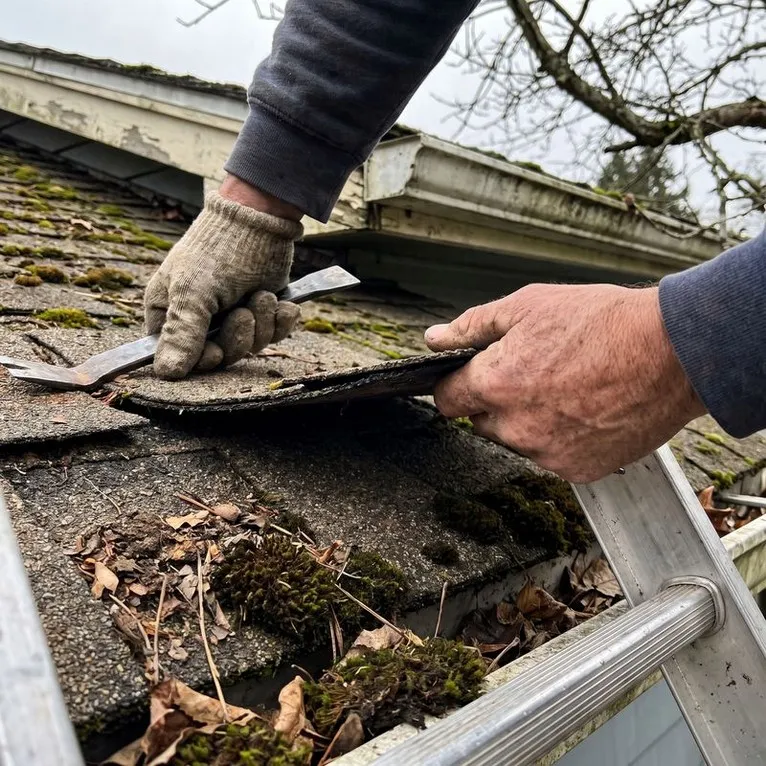
The Off-Grid Handbook folds the tree check into Project 8, its one-hour roof prep: no crumbling shingles, no moss mats and no overhanging deadwood. This guide builds on that, using extension and state guidance from the region.
Why ice storms hit the South differently
Our Texas winter storm guide deals with a statewide grid emergency. The Southeast's ice storm problem usually looks different: it is local and physical. A quarter inch of ice, the amount at which the National Weather Service usually issues an Ice Storm Warning, can snap limbs on every street and drop them across lines and roofs.
UGA Extension explains the mechanics: ice makes branches stiff and brittle, the added weight can snap limbs, and the wind that often comes with a winter storm finishes the job.
Some trees break more easily than others. NC State Extension lists weak-wooded species commonly planted in the region, including Leyland cypress, lacebark elm, Bradford pear, pines, laurel and water oaks, red and silver maples, and pecan. Pines have a second problem: a UGA forester notes they store little food in their roots, so they recover poorly from heavy damage.
How to prepare for an ice storm in the South: start with the trees
Whether you are asking how to prepare for an ice storm in Georgia, the Carolinas or Tennessee, tree work is fall work. Project 8 of the Handbook takes about an hour and $30 in materials, per the book, and its last step is to recheck the roof each fall and add it to the seasonal build order in Project 72. Stand in the yard and look up at every tree that could reach the house.
- Get an expert opinion on big trees. The South Carolina Attorney General's winter storm tips suggest having an arborist check for root rot, decay and structural weakness, and removing dead, diseased or hanging branches that could become projectiles.
- Look at what hangs over things. UGA Extension advises assessing larger trees with branches near roofs, roads or power lines, which may need pruning so they do not fall.
- Never top a tree. Cutting main branches back to stubs weakens the tree and violates industry standards, per the same South Carolina guidance.
- Leave the power lines to the utility. Limbs touching or near service lines are not a homeowner job. Call your power company.
The book's safety note for Project 8 is worth repeating: ladder work causes more household injuries than any project in the book. Use a stabilizer, keep three points of contact, and never work at a roof edge alone or in wind.
Winter storm in the South: getting the house ready
Pipes come next. Texas A&M AgriLife, writing for another warm-winter state, singles out pipes in attics and exterior walls and advises shielding pipes from direct wind, which speeds freezing. It also says pipe wrap and heat tape often sell out once freeze warnings are issued, so buy early.
Project 59 of the Handbook does the job in about two hours for roughly $30, per the book: foam sleeves on exposed runs in the crawlspace, garage and exterior walls, covers on outdoor faucets, and a tag on the main water shutoff that every adult in the house can find. Our guide to at what temperature pipes freeze explains when to start worrying.
Then choose the warm room. Project 49 picks a small room with few windows, seals the doorway with a heavy blanket and brings the household together in it. The details are in how to stay warm without power. Ready.gov's supply advice covers the rest: enough to stay home several days without power, including medication, pet needs and extra batteries.
When the power goes out: safe heat only
Carbon monoxide trouble in a winter outage usually starts with improvised heat or a misplaced generator. The rules from Ready.gov and CDC do not bend.
- Never heat the house with a gas stove or oven; see can you use a gas stove for heat.
- Run a portable generator outdoors only, at least 20 feet from windows, doors and vents, and never in a garage, even with the door open.
- Use only space heaters made for indoor use, and keep them at least 3 feet from anything that can burn.
- Keep a working battery CO alarm on every level. If anyone gets a headache, dizziness, weakness, nausea, vomiting, chest pain or confusion, get everyone to fresh air and call 911.
After the ice: limbs, lines and contractors
Stay away from fallen wires. CDC's rule is to never touch a fallen power line and to call the power company to report it. NC State Extension adds: never cut limbs tangled in power lines, and if a branch needs a ladder or a chainsaw to remove, strongly consider hiring a tree care professional.
For pines, UGA's advice is to prune broken branches back to the main stem or whorl. A pine that loses a major part of its top will probably have to come out.
Storm cleanup also draws bad contractors. The South Carolina Attorney General recommends:
- Photographing and filming all damage before cleanup, for your insurer.
- Asking for proof of ISA arborist certification and a certificate of insurance, then checking it with the insurer.
- Getting the scope of work, cleanup and final cost in writing.
- Never paying in full before the work is finished, and being wary of door-to-door offers that demand cash deposits.
A short Southern ice storm checklist
- Fall: arborist look at large trees near the house; dead and overhanging limbs removed.
- Fall: exposed pipes sleeved, outdoor faucets covered, main shutoff tagged.
- Before the storm: warm room staged, flashlights, battery radio, water and medication on hand.
- During: generator outdoors only, no gas oven for heat, CO alarms tested.
- After: stay clear of downed lines, photograph damage, hire only insured, certified tree crews.
Project 61's first-hour card ties it together: people, hazards, water, cold, light and a plan, in about 20 minutes. Our broader guide to how to prepare for an ice storm walks through it, and the winter storm preparedness checklist covers the full supply list.
Frequently asked questions
Why do ice storms cause so many outages in the South?
Ice adds weight to branches and makes them stiff and brittle, so limbs and whole trees break and fall across overhead power lines. The National Weather Service usually issues an Ice Storm Warning at around a quarter inch of ice. Neighborhoods with mature trees over the lines see the most damage, and repairs wait until fallen trees are cleared.
Should I trim trees before an ice storm?
Yes, but in the fall, not with ice in the forecast. Have dead, diseased and hanging branches removed, and have an arborist assess large trees with limbs over the roof, driveway or power lines. Avoid topping, which weakens trees. Anything touching or near a power line is a job for the utility, not the homeowner.
Which trees break most in ice storms?
NC State Extension lists weak-wooded species common in the Southeast, including Leyland cypress, lacebark elm, Bradford pear, pines, laurel and water oaks, red and silver maples, and pecan. Pines are especially vulnerable because they store little food in their roots and recover poorly from heavy damage, according to UGA.
Who removes a tree that falls on a power line?
The power company. Do not touch the line, the tree or anything in contact with them, and keep people and pets away. CDC says to call the power company to report fallen lines, and NC State Extension says never to cut limbs tangled in power lines. Once the line is safe, an insured tree service can handle the rest.
Sources
- The Off-Grid Handbook, Garrett Dalton, Project 8
- NC State Extension: Dealing With Ice Damaged Trees
- UGA Cooperative Extension, Fulton County: Winter Weather Damage
- UGA CAES Field Report: Pines Not as Resilient to Ice Damage as Hardwoods
- South Carolina Attorney General: Tips for Dealing With Downed Trees and Limbs
- CDC: What to Do to Protect Yourself From Electrical Hazards
- Ready.gov: Winter Weather
Safety guidance changes. Check the agency pages above for the current version, and follow your local code and manufacturer instructions.