Is rain barrel water safe for vegetable garden beds? What the experts actually say
Official advice is split, and the cautious answer is simple: tap water for salad greens, barrel water for everything you do not eat.
In this article
- Is rain barrel water safe for vegetable garden use? Why the answer is cautious
- Where the experts disagree
- If you use barrel water on vegetables: the precautions
- Your roof matters more than your barrel
- Do you need to treat rain barrel water for the garden?
- Barrel water versus greywater
- Where barrel water does the most good
- Frequently asked questions
Is rain barrel water safe for vegetable garden beds? Not with full confidence. CDC lists watering plants you plan to eat as a job for tap or bottled water, because roof runoff can carry germs from bird droppings and chemicals from roofing and gutters. Several university extension services take a softer line: they accept barrel water on vegetables if it goes on the soil, never on the leaves, and if every harvest is washed in drinking water before eating.
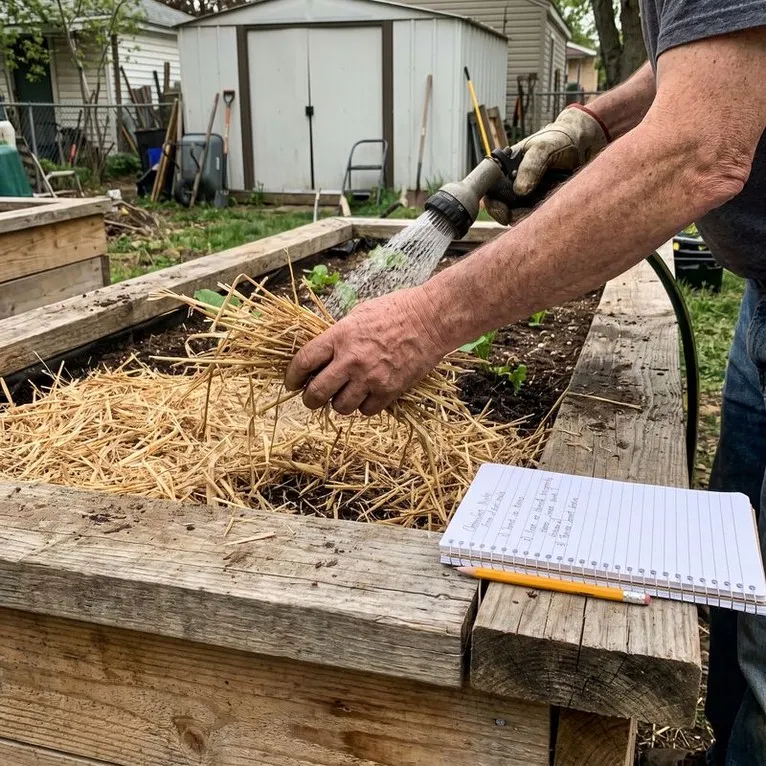
So the practical rule is this: use tap water for leafy greens and anything eaten raw, and barrel water for flowers, shrubs, trees and lawn. If you do use it on vegetables, the precautions below lower the risk.
Is rain barrel water safe for vegetable garden use? Why the answer is cautious
A roof is not a clean surface. Rutgers Cooperative Extension notes that a roof collects dust, leaves, pollen, animal feces, pesticides and other airborne residues, and all of it washes into the barrel with the first rain. CDC adds that chemicals such as asbestos, lead or copper can come from roofing materials, gutters, piping and storage containers.
That is why Project 1 of The Off-Grid Handbook, the gravity rain barrel, prints a safety box on its last page: rainwater from a roof is not drinking water as collected, and untreated rainwater is for gardens, flushing and washing only. The book does not single out vegetables. Federal guidance does, which is why this guide follows CDC on food plants.
Where the experts disagree
If you have read conflicting advice online, it is not your imagination. Here is what each source says about vegetables:
| Source | Position on vegetables |
|---|---|
| CDC | Use tap or bottled water for plants you plan to eat |
| Nebraska Extension | Not recommended for fruit and vegetable gardens |
| University of Wisconsin Extension | Not recommended for vegetables |
| UConn Extension | Avoid anything leafy you eat directly; apply to the soil |
| Clemson Extension | Apply to the soil, not the plant; not on harvest day; wash produce |
| Rutgers Cooperative Extension | Wash anything harvested with drinking water before eating |
The common ground is narrow but useful: nobody recommends spraying barrel water over lettuce you will eat that evening. Leafy crops are the highest risk because the part you eat is the part the water touches.
If you use barrel water on vegetables: the precautions
These come from the extension services above. Together they keep water off the edible parts and give sunlight and time a chance to work.
- Water the soil, not the plant. Clemson says to apply it around the base with drip irrigation or a watering can, never overhead. Our guide to rain barrel drip irrigation shows a gravity setup that does exactly that.
- Water in the morning, which Clemson recommends so the sun has time to dry the surface.
- Skip harvest day. Clemson advises against applying barrel water the day you pick.
- Use tap water on leafy greens and herbs eaten raw, as UConn suggests.
- Wash everything you harvest in cool drinking water before eating it.
- Keep the dirtiest water out. A first flush diverter sends the first roof runoff away from the barrel, and clean, screened gutters keep leaves and droppings out in the first place.
- Stop collecting after roof treatments. Rutgers says not to collect rain for up to three months after a moss killer has been used on the roof.
- Keep the inlet clean. Clemson says to clear debris from the barrel's screened inlet at least four times a year.
Your roof matters more than your barrel
The roof is the biggest variable. Nebraska Extension lists the materials of concern: asphalt roofing, redwood or cedar shakes, treated wood shingles, materials containing asbestos, lead solder or lead-based paint, zinc from galvanized flashing, and moss killers. Wisconsin does not recommend rain barrels at all on tar and gravel, asbestos or treated cedar shake roofs.
Asphalt shingles are where sources part ways. The Texas Water Development Board says composite shingles are not appropriate for drinking water systems but can be used to collect water for irrigation, while Nebraska puts asphalt on its list of concerns. With an asphalt roof, the cautious path is to keep barrel water for ornamentals.
Copper flashing or gutters, an old roof with lead flashing, or a recent chemical treatment are all reasons to keep barrel water away from food plants entirely.
Do you need to treat rain barrel water for the garden?
For flowers, shrubs and lawn, no. Screens, a clean barrel and regular use are enough.
For edibles, Clemson describes one option: add 1/8 teaspoon of unscented household bleach (5 to 6 percent) per gallon, then let the water stand 24 hours before applying it. Chlorine works on germs, not on chemicals or metals from the roof, so treatment does not fix a problem roof.
If you want to know what is actually in your barrel, testing is the only way to find out. CDC advises regular testing for germs and chemicals for anyone who drinks, cooks or bathes with rainwater; our guide on how to test water quality at home explains the options and their limits.
Drinking is a separate question with a stricter process. See can you drink rain water before anyone in the house drinks barrel water, even in an emergency.
Barrel water versus greywater
Do not confuse barrel water with greywater, the used wash water from sinks and showers. Project 10 of the Handbook, the greywater bucket loop, sends soapy water to ornamentals only, not vegetables you eat raw, and says to use it within 24 hours. Rainwater and greywater go in separate, labeled containers. Our guide to a greywater system for home covers the rest.
Where barrel water does the most good
The Handbook sites its raised bed, Project 40, within hose reach of the rain system, with this note: Chapter 1 pays into Chapter 3. That layout makes sense even with the cautions above. Use the barrel for the work that has no food safety question attached:
- Flower beds, shrubs, young trees and lawn.
- Soaking the soil of a new bed before planting, weeks before anything edible goes in.
- Wetting the compost pile and rinsing tools, pots and boots.
- Flushing toilets during an outage, as described in how to flush a toilet without water.
Then save tap water for the salad bed. If you are planning your first raised garden bed, put it near both the barrel and an outdoor faucet, so you can choose the right water for each crop.
Frequently asked questions
Can I water tomatoes with rain barrel water?
CDC advises tap or bottled water for any plant you plan to eat. Some extension services accept barrel water on fruiting crops like tomatoes if it goes on the soil at the base of the plant, never on the fruit or leaves, is not applied on harvest day, and the fruit is washed in drinking water before eating.
Is rain barrel water from an asphalt roof safe for vegetables?
Sources disagree. The Texas Water Development Board says composite shingle roofs can supply irrigation water, while Nebraska Extension lists asphalt roofing among materials of concern. The cautious choice is to use water from an asphalt roof on ornamentals and lawn, and tap water on vegetables.
Do I need to treat rain barrel water before watering plants?
Not for flowers, shrubs or lawn. For edible plants, Clemson Extension describes adding 1/8 teaspoon of unscented 5 to 6 percent bleach per gallon and waiting 24 hours before use. Bleach does not remove chemicals or metals that come off the roof.
Is rain barrel water better for plants than tap water?
Plants grow well with it, and it is free during dry spells. The concern is not the plants but the people eating them, because roof runoff can carry germs from bird droppings and chemicals from roofing. That is why the advice differs for edible and ornamental plants.
Sources
- The Off-Grid Handbook, Garrett Dalton, Project 1
- CDC: Collecting Rainwater and Your Health, an Overview
- Clemson Cooperative Extension HGIC: Best Practices for Application of Harvested Rainwater on Edibles
- UConn Extension: Can I Water Vegetables with My Rain Barrel Water?
- Rutgers Cooperative Extension: Rain Barrels Part II, Installation and Use (FS1118)
- Nebraska Extension: Rainwater Harvesting with Rain Barrels (G2220)
- Texas Water Development Board: The Texas Manual on Rainwater Harvesting
Safety guidance changes. Check the agency pages above for the current version, and follow your local code and manufacturer instructions.