How to store apples for winter: cold, humid and away from the potatoes
Apples keep for months in the right spot. The catch is that they change the vegetables stored next to them.
In this article
How to store apples for winter: choose sound, late-season apples with no bruises, keep them at 30 to 32°F with about 90 percent humidity and a little air movement, and store them well away from potatoes and other vegetables. Purdue University's horticulture specialists say later-maturing varieties can keep up to five months under those conditions.
A refrigerator works for a few bags. For a bigger harvest, a cold cellar, unheated room or outbuilding can do the job, as long as it stays above freezing and below 40°F.
How to store apples for winter: the conditions
| Condition | Target | Why |
|---|---|---|
| Temperature | 30 to 32°F is best; under 40°F works | Cold slows ripening and softening |
| Humidity | About 90 percent | Dry air shrivels the skin |
| Air | Some circulation | Keeps moisture and rot from building up |
| Neighbors | No potatoes, carrots or squash | Apples give off ethylene gas |
The temperature and humidity figures come from Purdue and Utah State University Extension. Purdue adds that a cool cellar, unheated room or outbuilding can be used as long as it is kept below 40°F but above 30°F, with reasonable humidity.
Pick the right apples to store
Storage can't improve an apple, only hold it. Purdue says only good-quality fruit free of bruises, cuts or other damage should go into storage.
- Late varieties keep longest. Purdue names Red Delicious, Northern Spy, Stayman, Winesap, Rome Beauty, Turley and Idared as better keepers than earlier apples, up to five months under ideal conditions.
- Eat the early ones fresh. Summer and early-fall apples are best eaten, dried or canned soon after picking.
- Sort hard. Any apple with a bruise, a puncture or a soft spot goes to the kitchen, not the crate.
Purdue's warning is the old saying taken literally: one bad apple can spoil the whole lot, both by bringing in rot and by releasing extra ethylene, which speeds ripening and aging in the fruit around it.
Apples and ethylene: keep them apart
Ripening apples give off ethylene, a natural gas that acts like a ripening signal. That is good news for a paper bag of hard pears and bad news for the rest of the cellar.
- Potatoes sprout. The Off-Grid Handbook puts it in the loading rules for its root cellar, Project 34: potatoes dark, and never beside apples, because ethylene sprouts them. Iowa State University Extension says the same.
- Apples turn musty. Utah State says not to store potatoes and apples together because potatoes make apples taste musty.
- Carrots turn bitter. South Dakota State University Extension warns that carrots stored near apples pick up a bitter taste from the ethylene.
- Squash stores shorter. Iowa State and Oregon State both say to keep winter squash away from apples and pears.
In a root cellar, give apples their own crates on the far side of the room from the potatoes. In a small house, that may mean apples in the refrigerator and potatoes in a cool, dark closet. Our guides to storing potatoes, storing carrots in sand and storing winter squash cover where each of the others goes.
Storing apples in the refrigerator
For most households the refrigerator is the simplest cold store. Purdue and Utah State both suggest perforated plastic bags, which keep humidity high while letting air move. Utah State's version: make 10 to 12 quarter-inch holes in each bag.
Use the crisper drawer, keep the bags away from leafy greens and carrots, and check them every week or two for any apple that has started to soften.
Storing apples in a root cellar
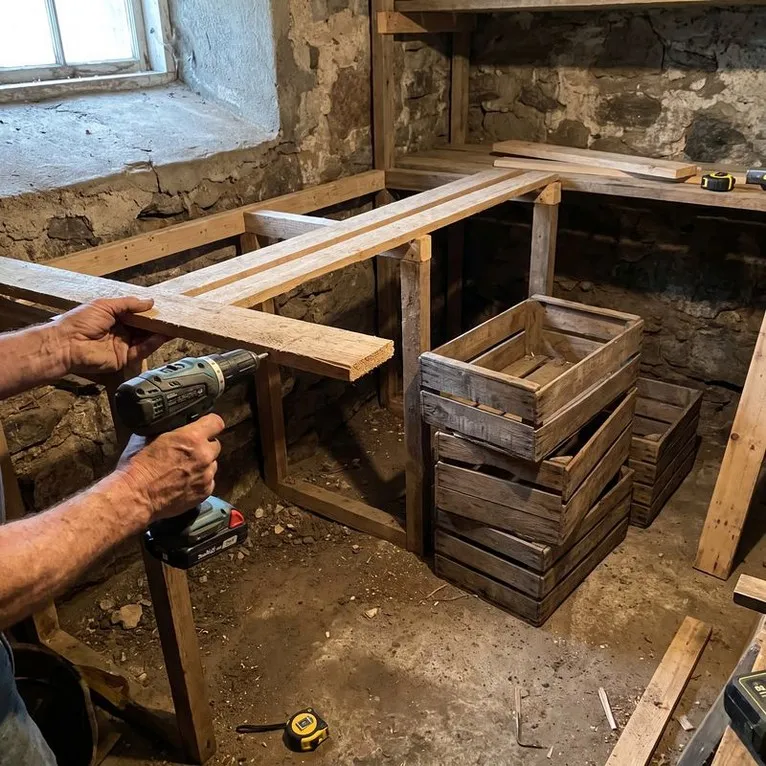
The Handbook's root cellar is built for this. Project 34 describes a partitioned, vented corner of an unheated basement that holds crates of roots and apples at 32 to 40°F all winter with zero energy. It is rated hard, a weekend of work and $150 to $300 in materials, per the book.
- Pack apples in wooden crates or ventilated boxes, a few layers deep.
- Set the crates on slatted shelves, never on bare concrete and never against the walls, as the book specifies.
- Put them as far from the potatoes as the room allows. The cold, low part of the cellar suits apples, since they want the coldest air of anything stored there.
- Read the thermometer and hygrometer weekly. Pull any apple that has gone soft.
Apples can be damaged by freezing, so watch the coldest corner during hard cold snaps and close the intake vent if the room drops toward freezing. Our guide to root cellar temperature and humidity explains the dampers, and how to build a root cellar covers construction.
How to store apples long term without a cellar
Most houses have no root cellar, and a modest supply of apples keeps well without one.
- The refrigerator, in perforated bags, for a few weeks' worth of fruit at a time.
- An unheated room, enclosed porch or outbuilding that stays between 30 and 40°F, the range Purdue gives. A thermometer on the shelf tells you whether the spot qualifies.
- A cold basement corner, with the apples in ventilated boxes and the potatoes on the other side of the house.
Whatever the spot, two habits matter most. Handle apples gently, because every bruise becomes a soft spot in storage. And look through them every week or two, pulling any apple that has started to soften before it affects the rest.
Signs an apple is past storage
Wrinkled skin means the air is too dry. Mealy, soft flesh means the fruit has aged too far, which happens sooner in warm storage. Brown spots and mold mean rot has started. Mealy apples still make good sauce; moldy ones go to the compost.
When apples won't keep
Bruised fruit, early varieties and anything that starts to soften are better preserved than stored. Apple slices dry well; see dehydrating food for beginners. Applesauce and apple slices can be canned in a boiling-water canner by tested recipes; start with water bath canning for beginners.
A few crates of sound apples in a cold room give a household fresh fruit well into winter, with no power used to keep them.
Frequently asked questions
What is the best temperature to store apples?
30 to 32°F with about 90 percent relative humidity, according to Purdue University and Utah State University Extension. A cellar, unheated room or outbuilding can work as long as it stays above 30°F and below 40°F.
How long can you store apples for winter?
Late-maturing varieties such as Northern Spy, Winesap, Rome Beauty, Stayman and Idared can keep up to about five months under ideal conditions, per Purdue. Early-season apples keep much less time and are best eaten, dried or canned soon after picking.
Can you store apples with potatoes?
No. Apples give off ethylene gas, which makes potatoes sprout, and Utah State University Extension notes that potatoes make apples taste musty. Keep them in separate crates on opposite sides of the cellar, or in separate rooms.
Should apples be stored in the refrigerator?
For small amounts, yes. Purdue and Utah State suggest perforated plastic bags in the refrigerator, which keep humidity high while letting air circulate. Keep them away from carrots and leafy greens, which ethylene can damage.
Sources
- The Off-Grid Handbook, Garrett Dalton, Project 34
- Purdue University Consumer Horticulture: Storing Apples for the Winter
- Utah State University Extension: Harvest and Storage of Vegetables and Fruits
- South Dakota State University Extension: Harvesting and Storing Root Vegetables
- Iowa State University Extension: Storing Winter Storage Vegetables
Safety guidance changes. Check the agency pages above for the current version, and follow your local code and manufacturer instructions.