How to store carrots in sand: a bin of damp sand keeps roots crisp for months
Carrots lose water fast in dry air. Damp sand holds the moisture around each root, the way the ground did.
In this article
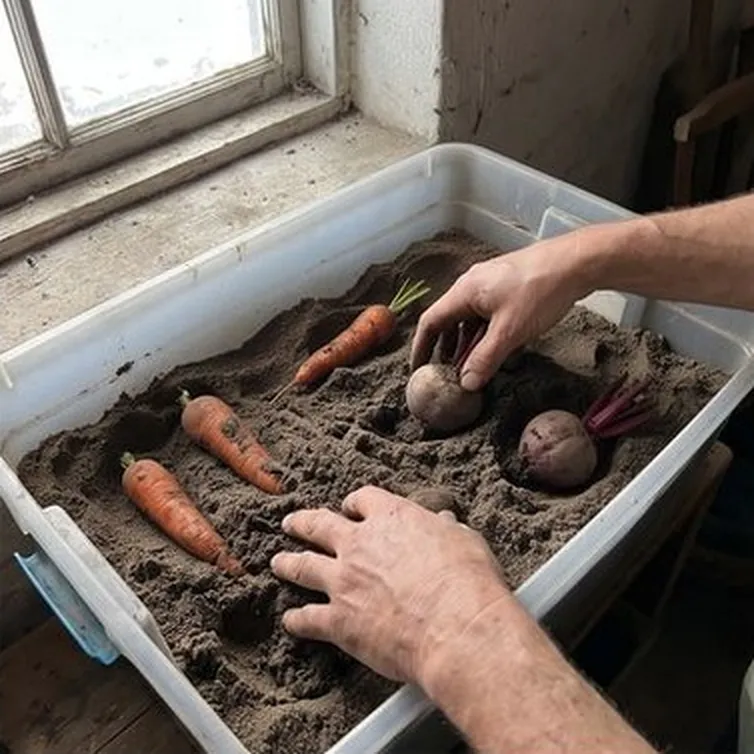
How to store carrots in sand: dig them in the fall, cut the tops off about half an inch to an inch above the root, don't wash them, then bury them in layers of slightly damp sand in a bin or crate so the roots don't touch. Keep the bin somewhere cold, near 32 to 35°F. Iowa State University Extension says carrots stored properly keep 4 to 6 months.
The method costs almost nothing: a container, a few bags of sand and a cold corner. The sand does one job: it holds moisture around each carrot. Iowa State puts the ideal humidity for carrots at 98 to 100 percent, damper than almost any room can manage on its own.
Why store carrots in sand
A carrot is mostly water, and once it is out of the ground it starts losing that water to the air. In a dry basement or refrigerator drawer it goes limp and rubbery. Packed in damp sand, it stays crisp.
The Off-Grid Handbook builds this into its root cellar, Project 34. The loading rules put carrots and beets in damp sand, low in the room where the air is coldest, and the target for roots is 32 to 40°F with about 85 to 95 percent humidity. Extension sources agree on the method: Iowa State says large quantities can be buried in sand or sawdust, and the University of Alaska Fairbanks lists moistened sawdust or sand for carrots and parsnips.
How to store carrots in sand, step by step
- Harvest on a dry day in fall, before the ground freezes. Dig gently so you don't snap or nick the roots.
- Brush, don't wash. South Dakota State University Extension advises against washing unless the roots are muddy, and letting them air-dry before storage to prevent rot.
- Trim the tops. Iowa State says to cut the green tops off one-half to one inch above the root. Leafy tops keep pulling water out of the carrot.
- Sort. Only firm, undamaged roots go into storage. Split, forked or nicked carrots go to the kitchen first.
- Dampen the sand. It should feel slightly moist, like a wrung-out sponge, not wet. Water pooling in the bottom of the bin rots roots.
- Layer. Spread an inch or two of sand in the bottom, lay carrots on it so they don't touch, and cover them with more sand, as SDSU describes. Repeat, finishing with sand on top.
- Store cold. Set the bin in the coldest spot you have that won't freeze.
Label the bin with the date and the crop, and put the roots you will eat first near the top. Any sturdy container works: a wooden crate lined with plastic, a plastic tote, a bucket. SDSU also describes a garbage can filled with layers of slightly damp sand and insulated with straw.
How to store carrots for winter: temperature and time
| Root | Temperature | Humidity | Trim | Storage life |
|---|---|---|---|---|
| Carrots | 32 to 35°F | 98 to 100% | Tops to 1/2 to 1 inch | 4 to 6 months |
| Beets | 32 to 35°F | About 95% | Foliage to 1/2 to 1 inch | 1 to 3 months |
| Parsnips | 32°F | 90 to 95% | Tops, leave 1/4-inch stem | About 6 months |
| Turnips | 38°F | 90 to 95% | Moist packing | About 3 months |
Carrot and beet figures are from Iowa State; parsnips and turnips from the University of Alaska Fairbanks. The sources differ slightly. Alaska lists carrots at 32°F and 90 to 95 percent humidity for about 5 months, so don't worry about hitting an exact number. Cold, damp and above freezing is the goal.
Where to put the bin: an unheated basement, a root cellar's lowest shelf, a cold garage corner that stays above freezing, or the steps of an outside basement entrance. If the spot could drop below freezing in a hard cold snap, move the bin or insulate it with straw or blankets.
Storing root vegetables in sand: beets, parsnips and more
The same method works for most roots that want cold, damp air. Beets go in exactly the way carrots do, with the foliage trimmed to within half an inch to an inch. Parsnips and turnips store well in moist packing too, per the Alaska chart.
Two crops don't belong in the sand bin:
- Potatoes want darkness and air movement in crates, and a little warmer than carrots. See how to store potatoes.
- Onions and winter squash want dry air. See how to store winter squash.
Keep apples away from the carrot bin as well. South Dakota State warns that carrots stored near apples turn bitter from the ethylene gas apples give off. Our guide on storing apples for winter covers where they go.
Checking the bin through the winter
- Every week or two, pull what you need from the top layer and feel a few roots further down.
- Limp carrots mean the sand has dried out. Sprinkle a little water over the top and mix it in lightly.
- Slimy or moldy carrots mean too much water or a damaged root. Remove it and the sand around it.
- White hairy roots or new green tops mean the bin is too warm. Move it somewhere colder.
The Handbook's last step for the root cellar is to manage by thermometer: read it weekly and adjust the vents. Our guide to root cellar temperature and humidity explains how, and how to build a root cellar covers the build.
No basement? Two other options
Leave them in the ground. Utah State University Extension says carrots, beets and parsnips can stay in the garden under a thick layer of straw or leaves and be dug as needed. This works best where the ground doesn't freeze rock-hard.
Bury a barrel. Project 35 of the Handbook is a 55-gallon barrel buried at 45 degrees below the frost line, holding 150 pounds or more of roots through winter, per the book. See the buried barrel root cellar guide.
To grow next year's carrots, plant them in a raised bed, where loose soil grows straight roots, or overwinter a late sowing in a cold frame.
Frequently asked questions
How long do carrots last stored in sand?
Iowa State University Extension says carrots stored properly at 32 to 35°F and very high humidity keep 4 to 6 months. The University of Alaska Fairbanks gives about 5 months. Check the bin every week or two and remove any soft or moldy roots.
Should you wash carrots before storing them in sand?
No. South Dakota State University Extension advises against washing root vegetables unless they are muddy, and letting them air-dry before storage to prevent rot. Brush off loose soil and wash them when you're ready to cook.
What kind of sand do you use to store carrots?
Clean sand that is slightly damp, moist like a wrung-out sponge but not wet. Water pooling in the container rots the roots. Moistened sawdust or peat moss also work, according to extension sources.
Can you store carrots in sand in the garage?
Yes, if the spot stays cold but above freezing. Carrots keep best at 32 to 35°F. If the garage can drop well below freezing in a cold snap, insulate the bin with straw or blankets or move it indoors.
Sources
- The Off-Grid Handbook, Garrett Dalton, Project 34
- Iowa State University Extension: Storing Winter Storage Vegetables
- University of Alaska Fairbanks Cooperative Extension: Vegetable Storage in Root Cellars
- South Dakota State University Extension: Harvesting and Storing Root Vegetables
- Utah State University Extension: Harvest and Storage of Vegetables and Fruits
Safety guidance changes. Check the agency pages above for the current version, and follow your local code and manufacturer instructions.