What to plant in a cold frame: the hardy roster, season by season
A cold frame doesn't make winter warm. It makes it mild enough for the right plants, sown at the right time.
In this article
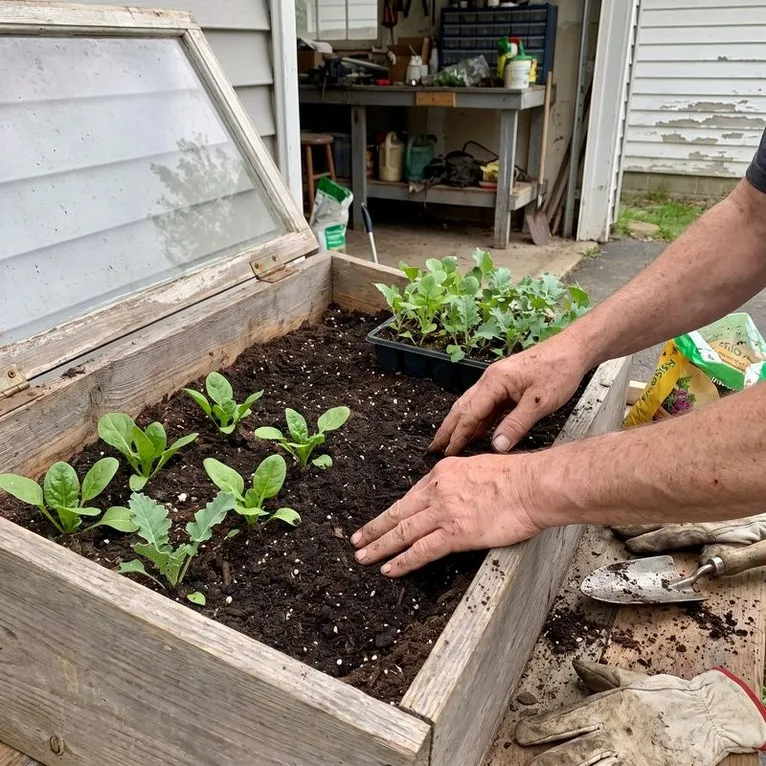
What to plant in a cold frame comes down to cool-season crops that shrug off frost: spinach, kale, lettuce, radishes and carrots are the core list in The Off-Grid Handbook, and mache, claytonia, arugula and Asian greens fit well too. Sow them in late summer and early fall for fall and winter picking, or in late winter for an early spring crop. Warm-season plants like tomatoes and peppers don't belong in a winter frame.
Project 41 of the Handbook says a cold frame adds four to eight weeks of growing on each end of the season, which in most climates is the difference between a garden and a food supply. The crops you choose decide whether you get those weeks.
What to plant in a cold frame: the hardy roster
South Dakota State University Extension notes that cool-season vegetables do best at air temperatures of 50 to 80°F with soil at 60 to 65°F, which is the range a closed frame creates on cool days. These crops handle it best:
| Crop | Why it works | Tip |
|---|---|---|
| Spinach | Very cold-hardy | Penn State Extension says savoy (crinkled) types are much hardier than flat-leaf |
| Kale | Keeps producing in the cold | Pick outer leaves, leave the center growing |
| Lettuce | Fast salad crop for fall and early spring | Less hardy than spinach; harvest before the deep cold |
| Radishes | Quick crop at either end of the season | Sow in small batches every couple of weeks |
| Carrots | Sweet roots held in the frame | Sow by late summer so they size up before winter |
| Mache (corn salad) | Penn State says it beats spinach for cold hardiness | Mild, nutty leaves |
| Claytonia | Tender winter green | Also called miner's lettuce |
South Dakota State's list for frames also includes arugula, Asian greens, peas, beets and turnips. Pick varieties sold for fall or winter growing when you can. Penn State names Winter Bloomsdale and Tyee spinach, and Scarlet Nantes and Autumn King carrots, as good choices.
Cold frame winter vegetables: when to sow
Timing matters as much as the crop. Plants grow very little in the short, dark days of midwinter, so the goal for a winter harvest is to have them at or near picking size before the deep cold arrives. The frame then holds them, and you pick through the winter.
- Late summer to early fall: sow spinach, kale, lettuce, mache, claytonia, carrots and radishes. University of Wisconsin Extension, for example, plants its fall spinach in mid-August for a late-September harvest or later. Check your local first frost date and count back from the days to maturity on the packet.
- Late fall and winter: mostly harvesting. Keep the lid closed on cold days and nights.
- Late winter to early spring: sow lettuce, spinach and radishes weeks before you could plant them in the open. NC State Extension notes that seedlings of hardy crops can start in a frame many weeks ahead of the open garden.
- Spring: use the frame to harden off seedlings started indoors, giving them a gradual move to outdoor weather, as NC State describes.
Overwintering spinach and carrots
The Handbook lists carrots "for overwintering." Sown in late summer, they sit in the frame through the cold and come out sweet in late winter or early spring. University of Wisconsin Extension notes that fall spinach can be cut back, leaving the roots and growing point, and may regrow a new crop of leaves in spring.
Venting: the step that decides everything
Project 41's rule is short: vent religiously. Above about 45°F outside, prop the lid, or a sunny January day cooks the crop. The book's field note says the prop stick matters more than the carpentry, because frozen crops recover and steamed ones do not.
- Sunny and above about 45°F: prop the lid partway.
- Warm and bright: open it wider or fully.
- Late afternoon: close it to hold the day's heat, as South Dakota State advises.
- Cold nights: NC State suggests covering the frame with old blankets, tarps or burlap sacks of leaves for extra protection.
The book suggests an automatic vent opener, about $15, which lifts the lid as the frame warms and takes the job off your memory. NC State also suggests a thermometer inside the frame to track highs and lows.
What not to plant
Skip warm-season crops for winter: tomatoes, peppers, squash, cucumbers and beans need heat that a cold frame can't supply in the dark months. Large, slow brassicas such as Brussels sprouts also take more room than a frame offers. Keep the space for low, fast, cold-hardy plants you can pick a little at a time.
Harvest a little at a time
Most frame greens are cut-and-come-again crops. Take the outer leaves of kale, spinach and lettuce and leave the center to keep growing, so one sowing feeds the household for weeks. Pick on milder afternoons, when the leaves are thawed, rather than first thing on a frozen morning.
Watering and care in the cold months
A closed frame slows evaporation, so it is easy to overwater. NC State advises watering early in the day so the plants dry before dark, which helps prevent disease. In the depths of winter, plants use little water; check the soil with a finger before you add any.
South Dakota State recommends a light layer of mulch as nights grow colder and clearing snow off the lid so light can get in. Sowing a little more thickly than usual also helps, since a fuller canopy holds heat close to the soil.
Build it, then plant it
Project 41 takes about three hours and $50, per the book: a sloped box with a 12-inch back and an 8-inch front, a reclaimed window sash or twin-wall polycarbonate lid hinged at the back, and a prop stick. Our DIY cold frame guide has the full build. The frame can sit over part of a raised garden bed or be filled as its own small bed.
A frame of greens covers fresh food through the cold months, while the storage crops carry the calories. Carrots pulled in fall can go into damp sand in the cellar. Save seed from your best open-pollinated greens with seed saving for beginners, and check how long seeds last before you sow last year's packets.
Frequently asked questions
What can you grow in a cold frame in winter?
Cold-hardy greens and roots: spinach, kale, lettuce, mache, claytonia, radishes and carrots are the main ones. The Off-Grid Handbook's roster is spinach, kale, lettuce, radishes and carrots for overwintering. Sow them in late summer or early fall so they reach picking size before the deepest cold.
When should you plant in a cold frame?
For fall and winter harvests, sow in late summer to early fall, counting back from your first frost date using the days to maturity on the packet. For an early spring crop, sow lettuce, spinach and radishes in late winter, weeks before you could plant in the open garden.
When should you open a cold frame?
The Off-Grid Handbook says to prop the lid whenever it is above about 45°F outside, especially on sunny days, or the plants can overheat. Close it again in the late afternoon to hold heat overnight. An automatic vent opener, about $15 per the book, does this for you.
Can you grow tomatoes in a cold frame in winter?
No. Tomatoes and peppers are warm-season crops and won't grow in a winter cold frame. Use the frame in spring to harden off tomato seedlings before planting them out, and keep winter for cool-season greens and roots.
Sources
- The Off-Grid Handbook, Garrett Dalton, Project 41
- South Dakota State University Extension: Cold Frames
- Penn State Extension: Season Extenders and Growing Fall Vegetables
- NC State Extension Gardener Handbook: Season Extenders and Greenhouses
- University of Wisconsin-Madison Extension: Spinach
Safety guidance changes. Check the agency pages above for the current version, and follow your local code and manufacturer instructions.