How to keep mosquitoes out of a rain barrel: screens, seals and a weekly look
Mosquitoes need standing water and a way in. Take away the way in and a rain barrel stops being a nursery.
In this article
- Why rain barrels attract mosquitoes
- How to keep mosquitoes out of rain barrel openings: find every gap
- Rain barrel mosquito screen: what to use
- Mosquitoes in rain barrel water already? What to do
- Larvicides: what is safe and what to avoid
- Keep the water moving
- A two-minute weekly check
- Frequently asked questions
Here is how to keep mosquitoes out of rain barrel water: cover every opening with fine mesh, including the inlet, the overflow and any vent, keep the lid tight, and keep a hose attached to the overflow at all times. Use the water regularly. If larvae still show up, empty the barrel onto the lawn or treat it with an EPA-registered larvicide made for standing water, used exactly as the label says. Never pour oil or homemade mixtures into the barrel.
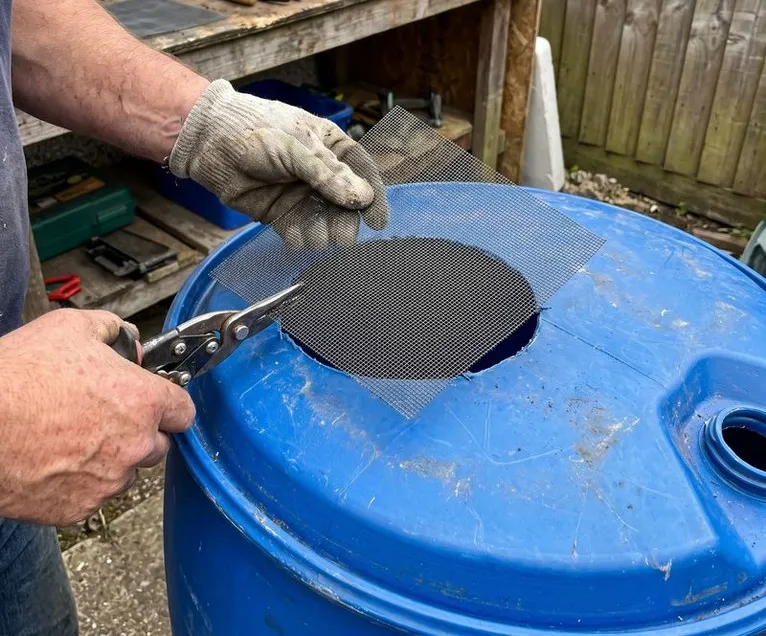
The Off-Grid Handbook makes this step 4 of Project 1, the gravity rain barrel: screen every opening with fine mesh to keep out debris, leaves and mosquitoes. It takes minutes and a scrap of screen.
Why rain barrels attract mosquitoes
Mosquitoes lay their eggs on or near still water, and a dark, sheltered barrel is ideal. Nebraska Extension notes that mosquitoes need 7 to 10 days of stagnant water to develop from egg to adult. That is why CDC's advice for rain barrels comes down to two choices: put a screen where the water comes in, or empty the barrel at least every 10 days.
Warm weather speeds everything up, so summer is when a forgotten barrel turns into a problem, and the mosquitoes it raises do not stay in your yard. They bite you, your family and the neighbors.
The good news is that a barrel is a closed container. Unlike a puddle or a clogged gutter, you can seal it. Once the adults cannot reach the water, they cannot lay eggs in it.
How to keep mosquitoes out of rain barrel openings: find every gap
A mosquito needs only a small opening. Walk around the barrel and check each of these:
- The inlet where the downspout or diverter hose enters.
- The lid seal. A warped or loose lid leaves a gap all the way around.
- The overflow port. Rutgers Cooperative Extension says to keep a hose attached to the overflow at all times, so it is not an open door.
- Vents and spare holes from an earlier setup, or a second barrel linked to the first.
- The space around the downspout if it drops into an open hole in the lid.
Gutters count too. EPA lists clogged rain gutters among the places mosquitoes breed, so clean, screened gutters protect both the house and the barrel. Our guide to gutter screens vs gutter guards covers the options.
Rain barrel mosquito screen: what to use
CDC says to cover containers without lids using wire mesh with holes smaller than an adult mosquito. Rutgers names the easy option: fiberglass or aluminum window screen. Wisconsin Extension adds that a fine mesh screen fitted to the lid keeps adult mosquitoes from reaching the water.
To fit it:
- Cut a piece of screen a few inches larger than the opening, with snips or scissors.
- Lay it over the opening and fasten it with a band, a ring, waterproof adhesive or the barrel's own lid insert.
- For hoses and fittings, wrap screen over the open end before connecting, or use fittings that seal tightly.
- Check after each big storm. Heavy flows and debris can tear or lift a screen.
Screen also keeps out leaves and grit, so the water stays cleaner and the spigot clogs less.
Mosquitoes in rain barrel water already? What to do
Larvae look like tiny wriggling commas near the surface. If you see them:
- Use or empty the water. Pour it on the lawn or ornamental beds, where larvae cannot survive once the water soaks in.
- Find the gap. Something let the adults in. Check the list above.
- Rinse the barrel if there is sludge on the bottom, then refit the screens.
- Consider a larvicide if the water cannot be emptied or fully sealed.
Larvicides: what is safe and what to avoid
CDC lists rain barrels among the places homeowners can treat with larvicides, products that kill larvae before they become biting adults. The most common for home use is Bti, a naturally occurring soil bacterium sold as dunks, granules or bits. EPA says Bti targets only the larvae of mosquitoes, blackflies and fungus gnats, has no toxicity to people, and is approved for organic farming.
Three rules matter:
- Choose an EPA-registered product whose label lists rain barrels or standing water containers.
- Follow the label exactly. CDC notes that larvicides used according to the label do not harm people, pets or the environment. EPA adds that some Bti products are allowed in certain drinking water containers and others are not.
- Do not use oil, dish soap or homemade mixes. They are not registered for this use, they end up on your plants and soil, and they make the water unfit for anything.
Barrel water is not drinking water in any case. The Handbook's safety box treats all harvested rainwater as non-potable until it has been filtered and disinfected; see can you drink rain water.
Keep the water moving
Wisconsin Extension says most rain barrel problems are avoided if water does not stand in the barrel for more than five to seven days. In practice that means using the water: on flower beds, on the lawn, for rinsing tools. CDC's general advice for anything that holds water is a weekly check.
A few habits help:
- Size the system to your use. More storage than you use means water that sits; see the rainwater harvesting calculator.
- Use the oldest water first and refill with the next storm.
- Keep debris out with a first flush diverter, since rotting leaves make the water more attractive to egg-laying mosquitoes.
- Drain for winter before the first hard freeze, as in how to winterize a rain barrel.
A two-minute weekly check
From spring through the first frost, a quick look once a week covers it:
- The lid is seated and the screens are intact, with no tears or lifted edges.
- The overflow hose is attached and not lying in a puddle.
- No wrigglers near the surface when you lift the lid.
- The gutters above are draining, with no standing water.
For the full build, from blocks to diverter to screens, see how to set up a rain barrel.
Frequently asked questions
Do rain barrels breed mosquitoes?
They can if mosquitoes can reach the water. Nebraska Extension says mosquitoes need 7 to 10 days of standing water to develop from egg to adult. A barrel with fine mesh on every opening, a tight lid and a hose on the overflow keeps the adults out.
What kind of screen keeps mosquitoes out of a rain barrel?
Mesh with holes smaller than an adult mosquito, as CDC advises. Rutgers Cooperative Extension says fiberglass or aluminum window screen works. Fit it over the inlet, the overflow and any vents, and check it after storms.
Is it safe to put mosquito dunks in a rain barrel?
EPA-registered Bti products whose labels list rain barrels or standing water can be used as directed. EPA says Bti targets only mosquito, blackfly and fungus gnat larvae and has no toxicity to people. Follow the label exactly, and never treat the barrel with oil or homemade mixtures.
Can I put oil in a rain barrel to kill mosquito larvae?
No. Cooking oil, motor oil and dish soap are not registered for mosquito control, and they end up on your plants and in your soil. Use screens first, empty the barrel if larvae appear, and use only an EPA-registered larvicide as labeled.
Sources
- The Off-Grid Handbook, Garrett Dalton, Project 1
- CDC: Mosquito Control at Home
- CDC: Larvicides
- EPA: Bti for Mosquito Control
- CDC: Collecting Rainwater and Your Health, an Overview
- Rutgers Cooperative Extension: Rain Barrels Part II, Installation and Use (FS1118)
- Nebraska Extension: Rainwater Harvesting with Rain Barrels (G2220)
Safety guidance changes. Check the agency pages above for the current version, and follow your local code and manufacturer instructions.