How to prepare for a planned power outage: a countdown from 48 hours
A scheduled outage gives you something a storm doesn't: time. Spent on the right list, a day or two of warning makes the shutoff almost uneventful.
In this article
How to prepare for a planned power outage comes down to one thing: use the warning time to do everything you would otherwise rush in the dark: charge every battery and power station, freeze water bottles and turn the fridge and freezer colder, fill water containers, stage the lights, refill prescriptions and plan for any medical device, and fill the car's tank. A day or two is enough if you work from a list.
The list below follows the First-Hour Checklist, Project 61 of The Off-Grid Handbook. With a planned outage, you get to run most of it before the lights go out.
Planned outages and PSPS shutoffs: what to expect
Planned outages come in two kinds. Scheduled maintenance outages are announced by the utility with a date and a time window. Public Safety Power Shutoffs (PSPS) are different: the California Public Utilities Commission describes them as utilities temporarily turning off power to specific areas to reduce the risk of wildfires caused by electric lines, typically during strong winds.
Notice can be short. Under California's rules, as summarized by the state's Legislative Analyst's Office, utilities must give other affected customers 24 to 48 hours of advance notice whenever possible. Plan for the outage to run past the posted window. Good PSPS power shutoff preparation starts before any notice arrives, with three things:
- Make sure the utility has your current phone number and email for outage alerts.
- If someone in the house relies on powered medical equipment, ask the utility whether it offers extra notice or a medical program.
- Sign up for local emergency alerts.
How to prepare for a planned power outage: the 48-hour countdown
These scheduled power outage tips work back from the shutoff time. Adjust them to the notice you actually get.
| When | What to do |
|---|---|
| 48 hours out | Confirm the date and window. Refill prescriptions. Call your doctor or pharmacist about refrigerated medicines and powered devices. |
| 24 hours out | Charge the power station, power banks and phones. Freeze water bottles. Turn the fridge and freezer to a colder setting. Fill the car's tank. Get some small bills. |
| Evening before | Fill water containers. Stage lanterns and headlamps. Set the cooler where you'll use it. Plan the first day's meals from the shelf. |
| At shutoff | Write the time on the fridge door. Unplug electronics. Keep the fridge and freezer closed. |
Ready.gov's first step for any outage is to take an inventory of everything you rely on that uses electricity. Do it at the 48-hour mark and the rest of the list writes itself.
Food: freeze ahead, open less
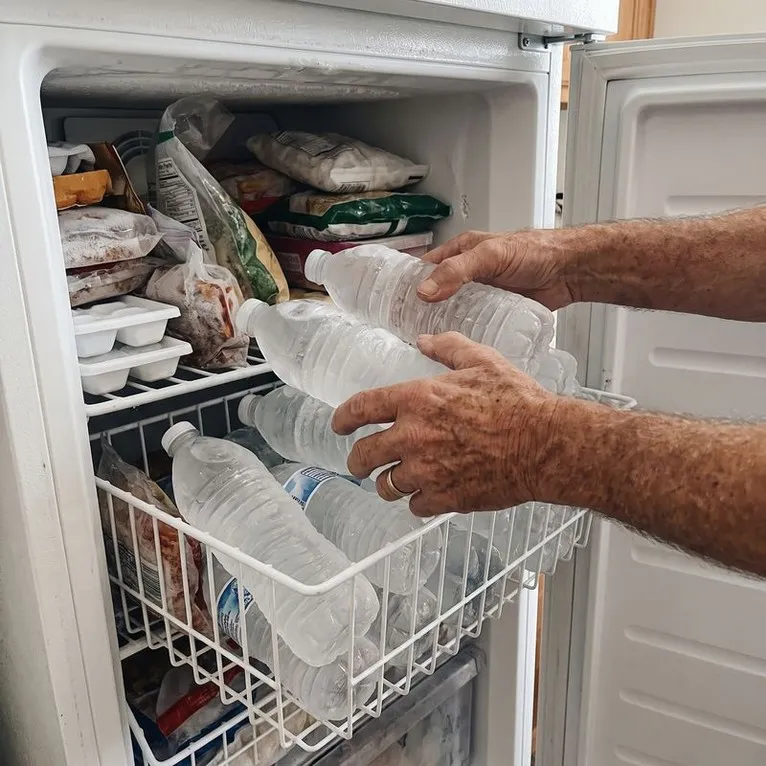
The cold you store before the shutoff is the cold you have during it. USDA FSIS advises keeping an appliance thermometer in the fridge and freezer (40°F or below and 0°F or below) and filling empty freezer space with frozen jugs of water, bags of ice or gel packs. NYC Emergency Management suggests turning both to a colder setting beforehand, so food stays cool longer.
Project 43 of the Handbook makes the frozen bottles a standing habit, not a last-minute job, and in an outage they move to a good cooler that becomes the fridge you open and close. The project costs about $25 and an hour.
- A closed refrigerator keeps food safe for about 4 hours.
- A full freezer holds about 48 hours, a half-full one about 24.
- Perishables above 40°F for more than 2 hours get thrown out. When in doubt, throw it out.
More detail in how long food lasts in the fridge without power.
Power: charge everything you own
A planned outage is the one time every battery in the house can start at 100 percent. Charge the power station fully the day before. Project 27 assigns it one job, the fridge or the medical device and phones, and the book's rule is "one box, one job." The project's time is about an hour; the cost varies with the station. If you rely on a CPAP, see our guide to a power station for a CPAP.
Charge the power banks too. Project 23 calls for two 10,000 mAh-class banks and a crank or solar radio with the NOAA weather band, about $35 for the radio. Phone tips are in how to charge your phone during a power outage.
If you own a portable generator, the rules don't change because the outage was scheduled: outdoors only, at least 20 feet from windows, doors and vents, never in a garage even with the door open, and never plugged into a wall outlet.
Water and the first-hour card
Water is the item people forget on a planned outage, and it matters most if you're on a well, because the pump needs power. Project 61's first block says to fill containers while pressure lasts. With warning, do it the evening before: one gallon per person per day for drinking, plus a filled tub for flushing. Our guide to water during a power outage covers wells and city water.
The card itself is the Handbook's core readiness tool: a laminated page whose first block is built to be finished in about 20 minutes: people accounted for, hazards checked, water filled, fridge shut with the time written on the door, lights up, radio on. It costs about $10 and an evening. A planned outage is the easiest possible first run, and a good time to note what stumbled. If you live in an apartment, add the building questions in our guide to power outages in an apartment.
During the outage and when power returns
- Keep the fridge and freezer closed, and use the cooler for drinks and snacks.
- Never use a gas stove or oven to heat the home, and keep grills and camp stoves outdoors. Keep battery-backed CO alarms on every level.
- Check on older or sick neighbors.
- When power returns, read the thermometers before you decide what to keep.
- For medicines, the CDC says that if the power was out for a day or more, throw away any that should be refrigerated unless the label says otherwise. Call your pharmacist or doctor before going without a medicine you need.
The rest of the routine is in what to do when the power goes out, and the gear is collected in our power outage kit list.
Frequently asked questions
How do you prepare for a scheduled power outage?
Charge every battery, power station and phone, freeze water bottles and turn the fridge and freezer colder, fill water containers, stage lights, refill prescriptions, plan for medical devices and fill the car's tank. Start 48 hours ahead if you have the notice.
How much notice do you get before a PSPS shutoff?
It varies. In California, the state Legislative Analyst's Office summarizes the rules as at least 24 to 48 hours of advance notice to affected customers whenever possible. Keep your contact details current with the utility so the alerts reach you.
Should I turn my fridge colder before a planned outage?
Yes. NYC Emergency Management suggests a colder setting before an outage so food stays cool longer. USDA advises keeping the fridge at 40°F or below and the freezer at 0°F or below, and filling empty freezer space with frozen jugs of water.
What should I unplug before a planned power outage?
Ready.gov advises disconnecting appliances and electronics to avoid damage from electrical surges when power returns. Keep the fridge and freezer closed until the power is back.
Sources
- The Off-Grid Handbook, Garrett Dalton, Project 61
- California Legislative Analyst's Office: Background on Public Safety Power Shutoffs
- California Public Utilities Commission: Public Safety Power Shutoffs
- Ready.gov: Power Outages
- USDA FSIS: Keep Your Food Safe During Emergencies
- CDC: What to Do During a Power Outage
- NYC Emergency Management: Hurricane Safety Tips
Safety guidance changes. Check the agency pages above for the current version, and follow your local code and manufacturer instructions.