How to prepare for a power outage in an apartment: a plan for renters
Renters can't install a generator or rewire anything, and they don't need to. An apartment outage plan is built from things that plug in, fold up or come down when you move.
In this article
How to prepare for a power outage in an apartment starts with one idea: plan around what renters can't do: no generator, no grill on the balcony, no changes to the building's wiring. What works instead is battery lighting staged before dark, a charged power station or power banks, frozen water bottles ready for a cooler, stored water in case the building's pumps stop, and window insulation you can take down when you move out.
In a power outage, renters have fewer options than homeowners, but they also need less. This guide covers each piece, and the questions worth asking your building manager before the first storm.
How to prepare for a power outage in an apartment: what's different
An apartment shares its systems with everyone else in the building, and that changes the plan:
- Water can stop. NYC Emergency Management warns that if you live in a high-rise, you may lose water service when the power goes out. Buildings that use electric pumps to move water up stop pumping without power.
- Elevators stop. Anyone who can't manage the stairs needs a plan before the outage, not during it.
- Hallways go dark unless the building has working emergency lighting.
- Shared walls can help. Heated neighbors on either side can slow how fast a middle unit cools.
Ask your building manager three things now: does the building have backup power for water pumps and stairwell lights, where are the stairwells and exits, and who to call when the power is out. If a neighbor down the hall is older or lives alone, swap phone numbers before the first storm. In a building, the people closest to you in an outage are the ones on your floor.
Apartment power outage tips for light and phones
Light comes first, because the first minutes of an outage are the most confusing. Project 29 of The Off-Grid Handbook stages it in fixed homes: one lantern in the kitchen, one in the main room, a headlamp at each bedside. Plug-in night lights that switch on when the power fails go in the hallway, so the path to the door lights itself. The kit costs about $50 and 30 minutes. Skip candles: the CDC recommends flashlights and battery lanterns instead because of the fire risk. More in our guide to power outage lighting.
For phones, a CPAP or a small fan, a battery power station is the renter's answer. It makes no exhaust, so it can sit inside. Project 27 says to buy on four numbers only: usable watt-hours, continuous inverter watts, solar input watts and battery chemistry, with LiFePO4 preferred. Give it one job, and keep it charged at the manufacturer's recommended level with a top-up every quarter. Our guide to what size solar generator you need walks through the sizing.
A gas generator is not an apartment tool. The CDC says never to run one less than 20 feet from any window, door or vent, and a balcony or patio sits right beside your windows and your neighbors'.
Keep the fridge cold without power
Most apartments have no room for a chest freezer, so the plan is small and simple. Project 43 keeps a stack of frozen water bottles in the freezer as standing policy; in an outage they move to a good cooler, which becomes the fridge you open and close. The project costs about $25.
USDA guidance sets the clock: a closed refrigerator keeps food safe for about 4 hours, and a full freezer holds about 48 hours (24 if half full). Keep both doors shut. Perishable food above 40°F for more than 2 hours gets thrown out, and a fridge thermometer turns that call into a reading. Details in how long food lasts in the fridge without power.
Water when the building's pumps stop
If your building depends on electric pumps, stored water matters more for you than for most homeowners. Keep one gallon per person per day, the Ready.gov figure, in sealed containers in a closet.
When an outage or storm is coming, NYC Emergency Management suggests filling the bathtub and other large containers too. Tub water is for flushing and washing; our guide to emergency water storage in the bathtub explains how to keep it clean if you plan to drink it.
Staying warm, the renter-friendly way
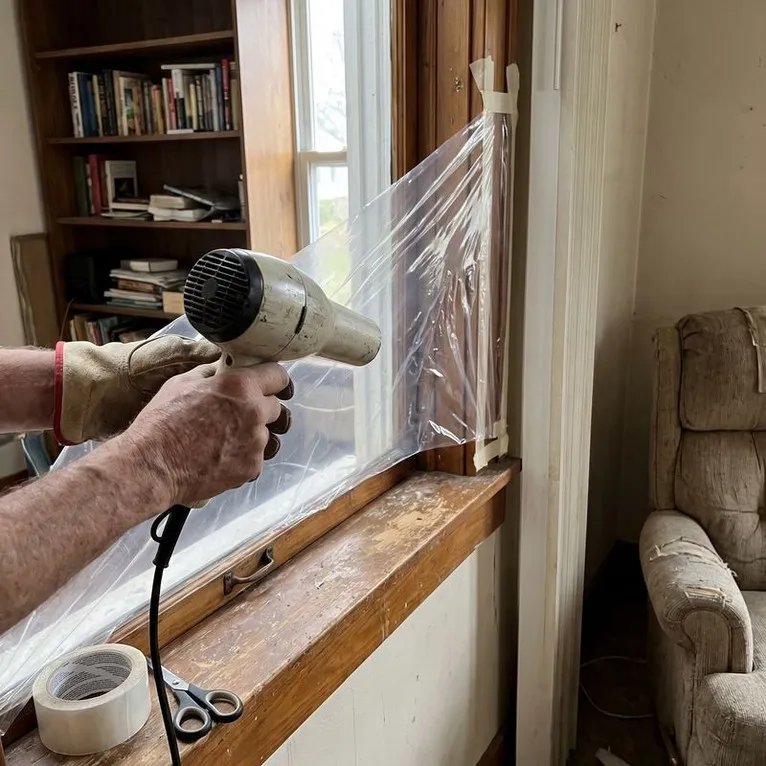
Windows lose more heat than walls, and the fix is one a landlord rarely objects to. Project 48, the Window Winter Kit, uses shrink film, lined curtains and draft snakes, and the book says they raise a window's effective insulation two- to three-fold. Its field note is written with renters in mind: the kit is seasonal and removable, which is exactly right for rentals, full effect, zero permission slips. It takes about two hours and roughly $60.
- Film first. Clean the frame, tape the edges, apply the film and shrink it tight with a hair dryer. The trapped air layer is the insulation.
- Curtains that seal. Mount them above the frame and past the sides, touching the sill.
- Daily routine. Open the sunny side by day, close everything at dusk.
- Draft snakes on leaky sills.
The step-by-step is in our guide to insulating windows for winter. If the apartment still gets too cold, or too hot in summer, Ready.gov's advice is to go to a community location with power.
Cooking and heat: what not to do in an apartment
- No grills on the balcony. The International Fire Code, adopted by many cities, bars charcoal and gas grills on balconies and within 10 feet of the building in multifamily housing, and bars storing larger propane cylinders on balconies. Albuquerque Fire Rescue, for one, spells this out for apartment residents. Check your local rules and lease.
- No camp stoves or charcoal indoors. They produce carbon monoxide.
- No gas stove or oven for heat. Ready.gov is direct: never use them to heat your home.
- A battery-backed CO alarm in your unit, near sleeping areas. If you don't have one, ask your landlord, and see where to put CO detectors.
Plan meals that need no cooking for the first days. When the utility announces a shutoff ahead of time, our guide to preparing for a planned power outage has a countdown list, and the power outage kit list fits in one apartment closet.
Frequently asked questions
Can you use a generator in an apartment?
No. The CDC says never to run a generator inside or less than 20 feet from any window, door or vent, and an apartment balcony or patio is too close to your windows and your neighbors'. Use a battery power station, which makes no exhaust, for phones and small devices.
Will I lose water in an apartment during a power outage?
You might, if your building uses electric pumps. NYC Emergency Management warns that high-rise residents may lose water service when the power goes out. Keep one gallon per person per day stored, and fill the tub and large containers before a storm.
Can renters insulate windows for winter?
Yes. Shrink film, lined curtains and draft snakes are seasonal and removable. The Off-Grid Handbook's Window Winter Kit uses exactly these and notes they suit rentals: full effect, no permission needed. If you're unsure about adhesive on the frames, ask your landlord first.
Can I grill on my apartment balcony during an outage?
Often not. The International Fire Code, adopted by many cities, bars charcoal and gas grills on balconies and within 10 feet of multifamily buildings. Check your local fire department and your lease, and never bring a grill or camp stove indoors.
Sources
- The Off-Grid Handbook, Garrett Dalton, Project 48
- Ready.gov: Power Outages
- NYC Emergency Management: Hurricane Safety Tips
- CDC: What to Do During a Power Outage
- USDA FSIS: Keep Your Food Safe During Emergencies
- Albuquerque Fire Rescue: Apartment Fire Safety (IFC 308.1.4)
- CDC: Proper Use of Candles During a Power Outage
Safety guidance changes. Check the agency pages above for the current version, and follow your local code and manufacturer instructions.